Make the theory make sense.
What should I study for PPCDL theory?
Organise PPCDL revision around rules of the road, buoys and cardinal marks, lights and shapes, safety, navigation calculations and Singapore waters. Read an explanation, inspect the illustration, work an example and check recall. myPPCDL supports this sequence with 15 guided lessons, topic practice and timed mock exams.
15 illustrated lessons · 82 worked examples · Practice and mock exams
A revision loop you can repeat
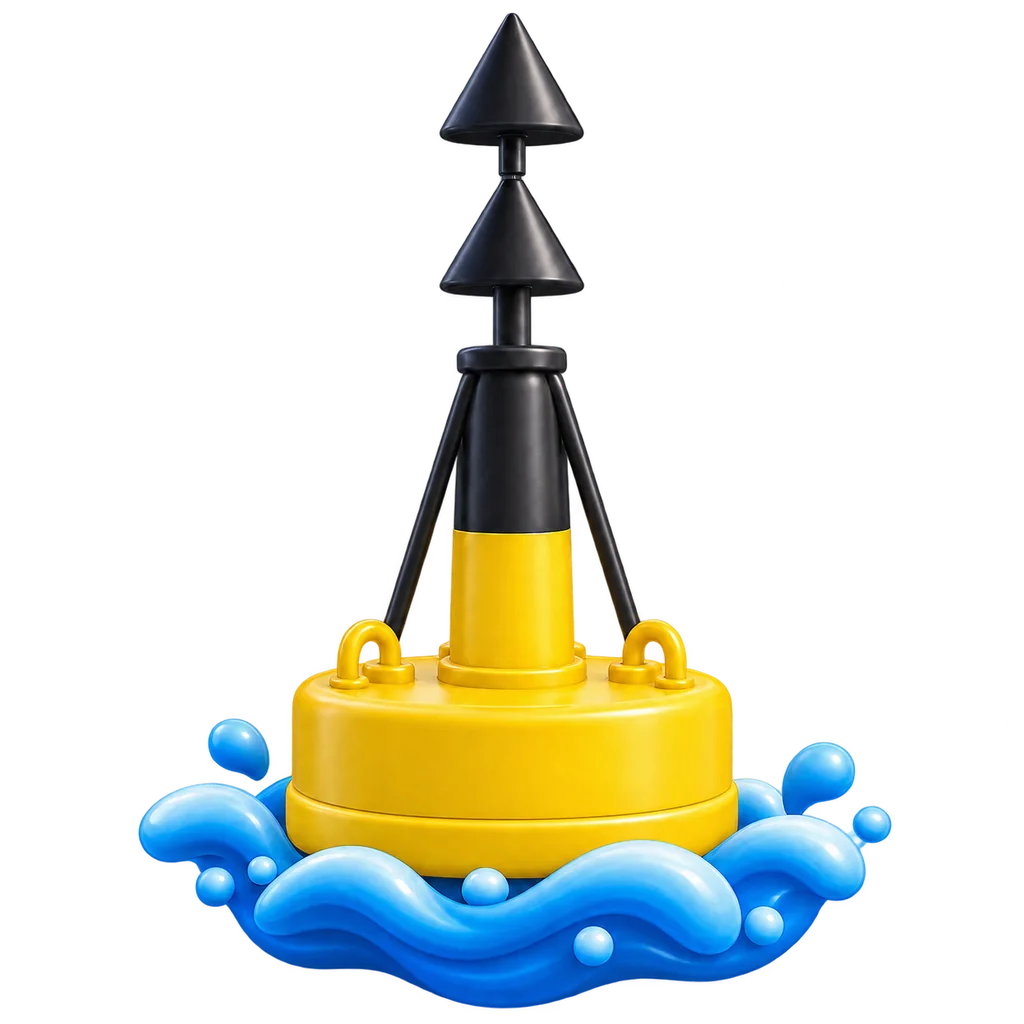
Use a short cycle: read an explanation, inspect its illustration, work an example, then answer a question without looking back. If you miss it, return to the part you could not explain. This gives each session a purpose beyond finishing another screen.
myPPCDL contains 15 guided lessons, 82 worked examples and 147 available practice questions. Lesson estimates are 15–22 minutes; there is no forced study countdown. The timed constraint belongs in mock exam mode, after you have built familiarity.
The topics below describe our revision coverage. They are not a claim to reproduce a current official examination syllabus or to provide every question you may face. Use the official-requirements guide alongside your approved training.
Buoys, beacons and cardinal marks
Compare a mark’s body, topmark and light, rather than relying on one colour. Draw the pattern from memory, then check the reference diagram. With a cardinal mark, connect the name to the indicated cardinal side of navigable water; chart context still matters.
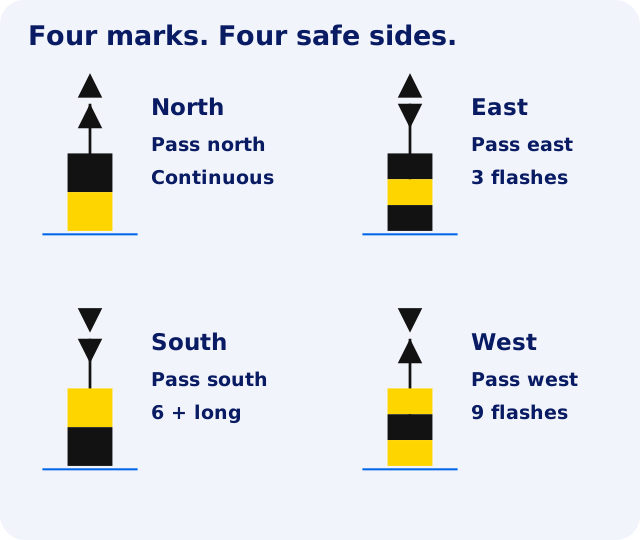
Try the first four sample practice questions and consult IALA’s buoyage reference for the system behind the symbols. In the app, topic lessons separate visual recognition from worked situations.
Rules of the road, lights and shapes
For a rules question, first name the encounter in plain language. Then connect it to the applicable rule and its conditions. For lights, ask which viewing direction and vessel status the pattern represents. Avoid turning a partial pattern into an assumption about a whole situation.
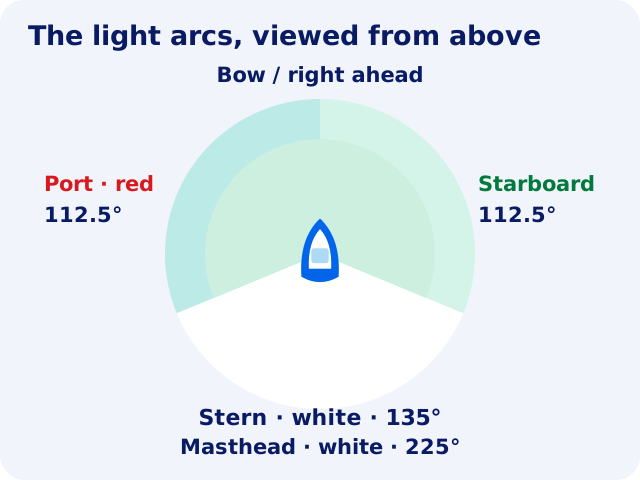
The IMO COLREG overview explains the rule groups, including steering, sailing, lights and shapes. Our boat, rules, lights and day-shape lessons let you compare daytime and night-time information, then test recall separately.
Tides, depth and anchoring calculations
Write the quantities down before doing arithmetic. Depth, attachment height, tide allowance and units should each have a clear place in your working. Do not assume that a ratio used in a classroom example is suitable for every real anchoring situation.
For example, if a paper exercise specifies a 5:1 ratio and gives a 5-metre vertical distance, its multiplication is 5 × 5 = 25 metres. Changing the supplied distance changes the result. Try the calculation questions in our free sample and explain each step before checking.
In the app, tide/depth and anchoring lessons offer worked examples to revisit. For real boating decisions, current conditions, equipment, charts and qualified instruction take priority over a study example.
Safety, berthing, emergencies and radio
Study procedures as a sequence you can explain: what you notice, what you prepare and what you communicate. A list of equipment names is less useful if you cannot connect it to a departure check or a developing problem.
Our safety, berthing, emergency and VHF lessons provide separate illustrations and examples. When revising a call, say the structure aloud and distinguish distress, urgency and safety messages. Check the current instructions for your equipment and operating area; a marina working channel is not a universal emergency channel.
The MPA pleasure-craft guidebook provides wider safety background. It is a dated publication, so use current MPA notices and official licensing guidance for rules or local operational details that may have changed.
Singapore waters and island knowledge
Separate recognition from permission. Knowing an island’s name or recognising a photograph does not establish today’s access, depth, tide or anchoring conditions. In your notes, keep a place description separate from facts you would have to check before a trip.
Our Singapore-waters and island-planning lessons use illustrations and dated place photographs. They support familiarity and study, not route recommendations. Use MPA’s current guidance and the relevant up-to-date navigational information for real-world decisions.
App lessons or a study PDF?
Choose the app when you want short sessions, illustrated worked examples, topic practice, mock exams and progress tracking. Start with a topic that needs work, then return to the next question with a clearer reason for your answer.
Choose the separately sold 87-page Study Book PDF when you want a personal reading copy you can keep offline. It has 14 reading chapters, 62 worked situations and reference illustrations. It is a different product from app membership and is not a set of official examination papers.
You can combine the formats, but neither purchase replaces approved practical training or an official booking. Compare course access prices, try the free questions and use a timed mock when you are ready to test recall across topics.
Give your revision a clear next step.
Follow the illustrated lessons, work the examples and return to the topics that need more practice.
Membership includes 15 illustrated lessons, 82 worked examples, topic practice, timed mock exams and saved progress.
Sources and editorial notes
Official links and stated exam facts checked . Prepared by UX Habitat Pte Ltd with AI assistance. Independent study material; not affiliated with MPA or Singapore Polytechnic.
- SP English examination details
- SP theory booking
- MPA licensing guidance
- IMO collision-regulation overview
- IALA buoyage reference
- MPA dated pleasure-craft guidebook
Check live official pages for current schedules, fees and requirements. Report a correction or read how we prepare study content.